
≥98%
736992-21-5
640.75 g/mol
SS-31 (Elamipretide)
A mitochondria-targeted peptide studied in preclinical cell-culture models of cellular energy regulation and mitochondrial-dysfunction research models.
Minimum order: 10 units per compound, across any mix of sizes.



Pay with Visa, Mastercard, or AMEX · ACH bank transfer saves 5%
Cold-chain shipping via UPS, with tracking provided. Freight and lead time are confirmed on your quote.
Third-party tested
Supplied to qualified labs and institutional buyers. Institutional use & buyer eligibility
Characteristics
| Property | Value |
|---|---|
| Molecular Formula | C₃₂H₄₉N₅O₅ |
| CAS Number | 736992-21-5 |
| Molar Mass | 640.75 g/mol |
| Amino Acid Sequence | D-Arg-Dmt-Lys-Phe-NH₂ (Dmt = 2',6'-dimethyltyrosine) |
| Synonyms | Elamipretide, MTP-131, Bendavia, RX-31 |
| Physical Form | Lyophilized powder |
| Solubility | Freely soluble in water and aqueous buffers |
| Organoleptic Profile | White to off-white lyophilized powder; odorless |
| Storage Conditions | Store lyophilized at -20°C; reconstituted solution stable at 2-8°C for up to 14 days; protect from light |
| Composition | Lyophilized elamipretide acetate salt |
How is SS-31 (Elamipretide) Used in Research?
SS-31, also known as elamipretide, is a mitochondria-targeted tetrapeptide with the sequence D-Arg-Dmt-Lys-Phe-NH₂, where Dmt is 2',6'-dimethyltyrosine. Developed by Hazel Szeto and Peter Bhatt at Weill Cornell Medical College, SS-31 belongs to the Szeto-Schiller (SS) family of peptides characterized by an alternating aromatic-cationic motif that enables selective concentration in the inner mitochondrial membrane. The peptide accumulates in mitochondria at concentrations 1,000-5,000 fold higher than extracellular levels, driven by the mitochondrial membrane potential, and selectively binds to cardiolipin — a phospholipid unique to the inner mitochondrial membrane that is essential for electron transport chain function.
The primary mechanism of SS-31 involves stabilization of cardiolipin-cytochrome c interactions on the inner mitochondrial membrane. Cardiolipin normally anchors cytochrome c to the membrane surface, facilitating efficient electron transfer between Complex III and Complex IV of the electron transport chain. Under oxidative stress, cardiolipin peroxidation disrupts this interaction, leading to cytochrome c dissociation, electron leak, increased reactive oxygen species (ROS) generation, and ultimately mitochondrial permeability transition and apoptosis. SS-31 binds to cardiolipin and prevents its peroxidation, preserving cristae structure, optimizing electron transport efficiency, and reducing ROS emission. Research by Birk et al. demonstrated that SS-31 restores mitochondrial cristae architecture in aged cardiomyocytes to a morphology resembling young tissue.
Research development of elamipretide has focused on mitochondrial myopathy and heart failure models. Phase 2 research studies in primary mitochondrial myopathy (Barth syndrome and other genetic mitochondrial disease models) have demonstrated improvements in the 6-minute walk test and research-subject-reported outcomes. In heart failure with reduced ejection fraction models, the PROGRESS-HF research study investigated elamipretide's effects on left ventricular volumes and function. Preclinical research has explored applications in ischemia-reperfusion injury, age-related organ dysfunction, neurodegenerative diseases, and skeletal muscle aging, all conditions associated with mitochondrial dysfunction and cardiolipin remodeling.
This product is supplied in a lyophilized form and requires reconstitution prior to laboratory handling. For research and laboratory use only. Not for human or veterinary consumption.
Areas of Study
Mitochondrial Membrane Stabilization
Selectively binds cardiolipin on the inner mitochondrial membrane, preserving cristae structure and cytochrome c interactions critical for electron transport.
Ischemia-Reperfusion Injury
Investigated for protection against mitochondrial damage during ischemia and reperfusion in cardiac, renal, and cerebral tissue models.
Primary Mitochondrial Myopathy
Preclinical and research studies in Barth syndrome and other genetic mitochondrial disease models demonstrate functional improvements and symptom reduction.
Cardiac Function
Studied in heart failure models for restoration of mitochondrial bioenergetics and improvement of left ventricular function via cardiolipin stabilization.
Age-Related Mitochondrial Decline
Preclinical research demonstrates reversal of age-related cristae remodeling and restoration of mitochondrial function in aged cardiomyocytes and skeletal muscle.
References
- [1]Szeto HH. (2014). First-in-class cardiolipin-protective compound as a therapeutic agent to restore mitochondrial bioenergetics. British Journal of Pharmacology, 171(8), 2029-2050.
- [2]Birk AV, Liu S, Soong Y, et al. (2013). The mitochondrial-targeted compound SS-31 re-energizes ischemic mitochondria by interacting with cardiolipin. Journal of the American Society of Nephrology, 24(8), 1250-1261.
- [3]Siegel MP, Kruse SE, Percival JM, et al. (2013). Mitochondrial-targeted peptide rapidly improves mitochondrial energetics and skeletal muscle performance in aged mice. Aging Cell, 12(5), 763-771.
- [4]Reid Thompson W, Hornby B, Manuel R, et al. (2021). A phase 2/3 randomized clinical trial followed by an open-label extension to evaluate the effectiveness of elamipretide in Barth syndrome. Genetics in Medicine, 23(3), 471-478.
- [5]Sabbah HN, Gupta RC, Kohli S, et al. (2016). Chronic therapy with elamipretide (MTP-131), a novel mitochondria-targeting peptide, improves left ventricular and mitochondrial function in dogs with advanced heart failure. Circulation: Heart Failure, 9(2), e002206.
Disclaimer: The information provided is for research reference only and does not constitute medical advice. Products are sold strictly for in-vitro research use.
Certificate of Analysis (COA)
Third-Party Verified Quality
Every batch of SS-31 (Elamipretide) is independently tested by an A2LA-accredited (ISO 17025:2017) third-party laboratory using HPLC-UV/VIS for purity and measured quantity. Each COA carries the lab's signed report and a batch-specific lot number. We publish these results publicly so you can verify exactly what you're getting.
View Lab ResultsRelated Products
 Popular
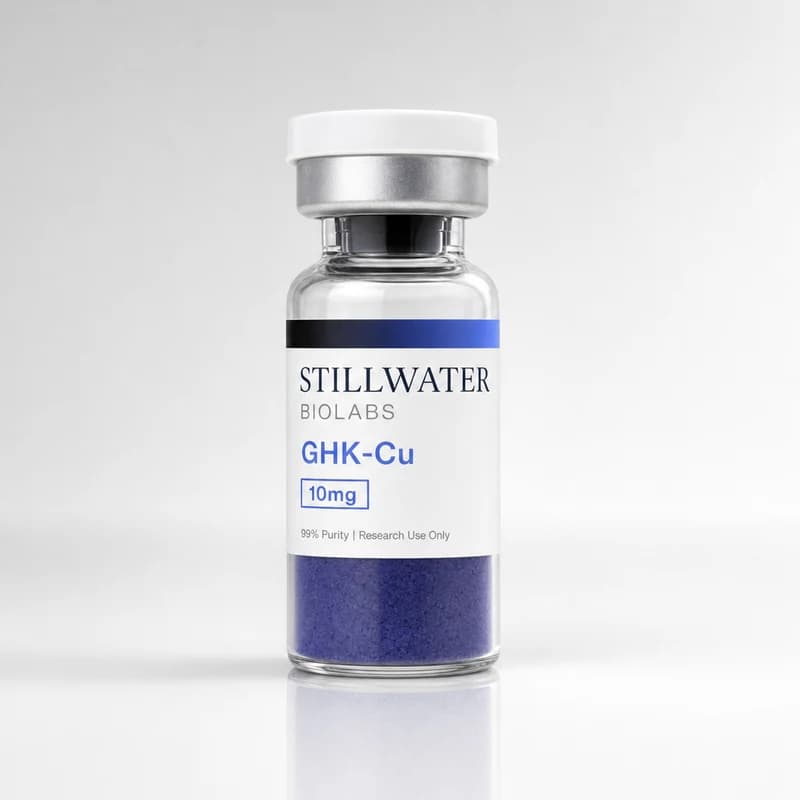
GHK-Cu
50mg – 100mg
Copper peptide GHK-Cu. Studied in collagen/ECM assay models, in-vitro wound-assay outcomes, and antioxidant-enzyme-induction research.
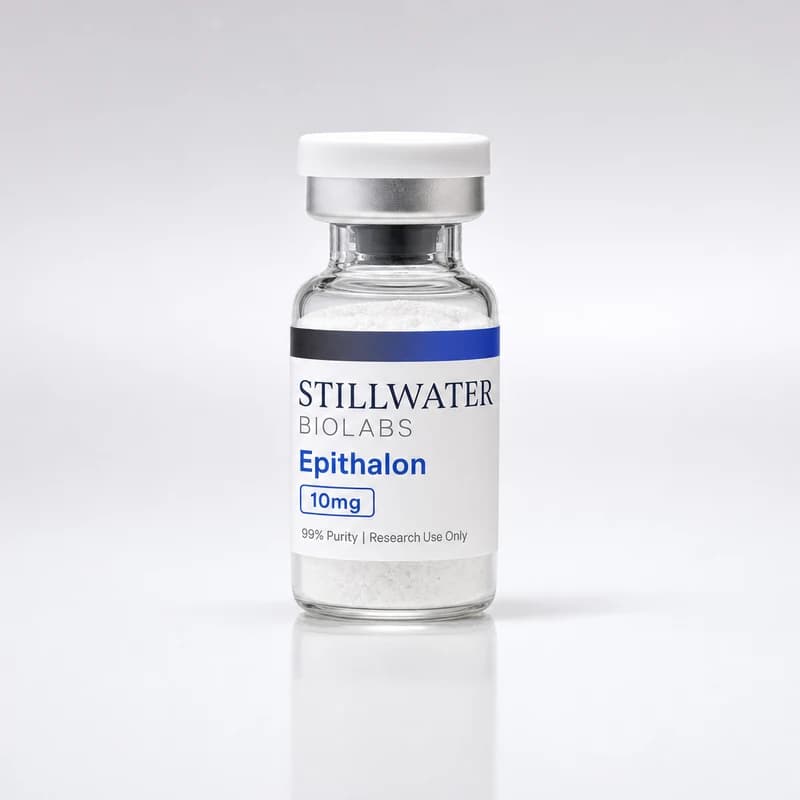
Epithalon
10mg – 50mg
A synthetic tetrapeptide studied for telomerase-activation assays and cellular-senescence research mechanisms.
 Popular
NAD+
500mg
Nicotinamide adenine dinucleotide (NAD+). A coenzyme reference standard supplied for in-vitro cell-culture and analytical method-development research. Not for use in any living organism.
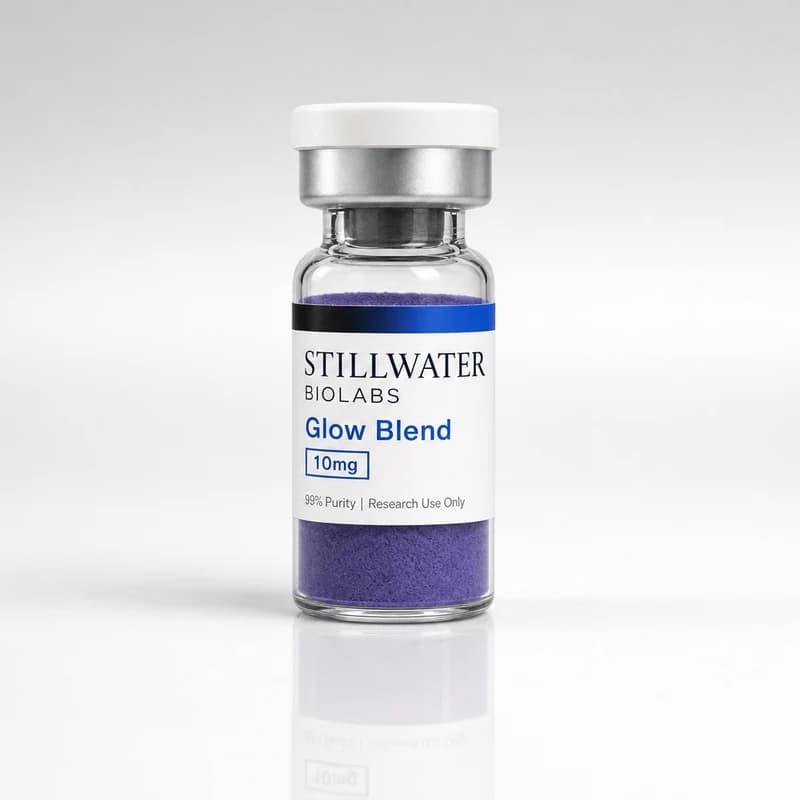
Glow Blend
70mg (10mg BPC + 10mg TB + 50mg GHK)
A lyophilized blend of BPC-157 (15 aa), TB-500 (43 aa), and GHK-Cu (copper tripeptide complex) supplied for in-vitro extracellular-matrix and copper-binding assays.
Frequently Bought Together
SS-31 (Elamipretide)
10mg
Request pricing
GHK-Cu
50mg
Request pricing
Epithalon
10mg
Request pricing