
≥99%
49557-75-7
403.93 g/mol
GHK-Cu
Copper peptide GHK-Cu. Studied in collagen/ECM assay models, in-vitro wound-assay outcomes, and antioxidant-enzyme-induction research.
The quiet problem with most copper peptide samples
Stillwater Research Desk · what to verify before ordering
Minimum order: 10 units per compound, across any mix of sizes.



Pay with Visa, Mastercard, or AMEX · ACH bank transfer saves 5%
Cold-chain shipping via UPS, with tracking provided. Freight and lead time are confirmed on your quote.
Third-party tested
Supplied to qualified labs and institutional buyers. Institutional use & buyer eligibility
Certificate of Analysis
Independent third-party verification · Vanguard Laboratory · ISO 17025:2017 · A2LA #6377.01.01
Purity
>99.80% ± 0.18%
Method
HPLC-UV/VIS
Lot
2
Test Date
Mar 16, 2026
Measured Fill
49.35 mg
Report ID
V260305-6 001
For laboratory research use only. Not for human or veterinary use. Not for diagnostic or therapeutic use.
Characteristics
| Property | Value |
|---|---|
| Molecular Formula | C₁₄H₂₃N₃O₄·Cu |
| CAS Number | 49557-75-7 |
| Molar Mass | 403.93 g/mol (copper complex) |
| Amino Acid Sequence | Gly-His-Lys (tripeptide) chelated to Cu²⁺ |
| Synonyms | Copper peptide GHK-Cu, Glycyl-L-histidyl-L-lysine copper(II), Loren Pickart's copper peptide |
| Physical Form | Lyophilized powder |
| Solubility | Freely soluble in water |
| Organoleptic Profile | Blue to blue-violet lyophilized powder; odorless |
| Storage Conditions | Store lyophilized at -20°C; protect from light; reconstituted solution stable at 2-8°C |
| Composition | Lyophilized GHK-Cu complex |
How is GHK-Cu Used in Research?
GHK-Cu is a naturally occurring copper-binding tripeptide (Gly-His-Lys) first isolated from human plasma by Loren Pickart in the 1970s. The peptide has a high affinity for copper(II) ions, forming a stable 1:1 complex that is the biologically active form. GHK-Cu is present in human plasma, saliva, and urine, with plasma concentrations declining significantly with age — from approximately 200 ng/mL at age 20 to 80 ng/mL by age 60. This age-related decline has generated substantial research interest in the peptide's role in tissue-maintenance and tissue-repair research models.
Research has demonstrated that GHK-Cu modulates the expression of a remarkable number of human genes — a 2010 Broad Institute Connectivity Map analysis identified 4,000+ genes whose expression was significantly regulated by GHK, including genes involved in collagen/ECM assay pathways, inflammatory-marker modulation in preclinical studies, antioxidant-enzyme defense, and stem-cell recruitment markers. The peptide is studied in collagen/ECM assay models of types I, III, and IV, and in elastin, decorin, and glycosaminoglycan assays. It also stimulates production of metalloproteinases and their inhibitors (TIMPs) in preclinical ECM-remodeling assay models. Additionally, GHK-Cu upregulates integrin expression in cell-culture systems, facilitating cell-adhesion and migration kinetics research.
Dermatological research has extensively characterized GHK-Cu in in-vitro wound-assay outcomes and preclinical skin-remodeling models. Studies show wound-closure kinetics in preclinical models, activity in in-vitro endothelial tube-formation (angiogenic) assays, nerve-outgrowth assay markers, and improved organization in tissue-repair research models. The peptide has also been investigated for anti-fibrotic assay activity, modulation of free-radical damage markers through superoxide-dismutase induction, and cancer-research gene-expression modulation of markers associated with aggressive tumor behavior.
This product is supplied in a lyophilized form and requires reconstitution prior to laboratory handling. For research and laboratory use only. Not for human or veterinary consumption.
Areas of Study
Dermal Matrix Research
Studied in collagen/ECM assay models of collagen I, III, and IV, elastin, decorin, and glycosaminoglycans while modulating metalloproteinase activity in preclinical ECM-remodeling assays.
In-Vitro Wound-Assay Outcomes
Examined in wound-closure assays, in-vitro endothelial tube-formation (angiogenic) assays, and nerve-outgrowth markers, with improved architectural organization in tissue-repair research models.
Gene Expression Modulation
Broad Institute analysis identified over 4,000 genes regulated by GHK, spanning collagen/ECM assay pathways, inflammatory-marker modulation in preclinical studies, and stem-cell pathway markers.
Antioxidant Defense
Induces superoxide dismutase and other antioxidant enzymes in preclinical cell cultures, modulating oxidative stress and free-radical damage markers.
Anti-Fibrotic Assay Activity
Investigated for modulation of scar-tissue and fibrotic-marker formation in preclinical models through balanced metalloproteinase and TIMP regulation.
Hair Follicle Biology
Studied in hair-follicle research models for effects on follicle enlargement and hair-growth markers, potentially through in-vitro endothelial tube-formation assays and beta-catenin activity.
References
- [1]Pickart L, Vasquez-Soltero JM, Margolina A. (2015). GHK peptide as a natural modulator of multiple cellular pathways in skin regeneration. BioMed Research International, 2015, 648108.
- [2]Pickart L, Vasquez-Soltero JM, Margolina A. (2012). GHK-Cu may prevent oxidative stress in skin by regulating copper and modifying expression of numerous antioxidant genes. Cosmetics, 2(3), 236-247.
- [3]Lamb J, Crawford ED, Peck D, et al. (2006). The Connectivity Map: using gene-expression signatures to connect small molecules, genes, and disease. Science, 313(5795), 1929-1935.
- [4]Maquart FX, Pickart L, Laurent M, et al. (1988). Stimulation of collagen synthesis in fibroblast cultures by the tripeptide-copper complex glycyl-L-histidyl-L-lysine-Cu²⁺. FEBS Letters, 238(2), 343-346.
- [5]Leyden J, Stephens T, Finkey M, Appa Y, Barkovic S. (2002). Skin care benefits of copper peptide containing facial cream. American Academy of Dermatology 60th Annual Meeting, Abstract P68.
Disclaimer: The information provided is for research reference only and does not constitute medical advice. Products are sold strictly for in-vitro research use.
Related Products
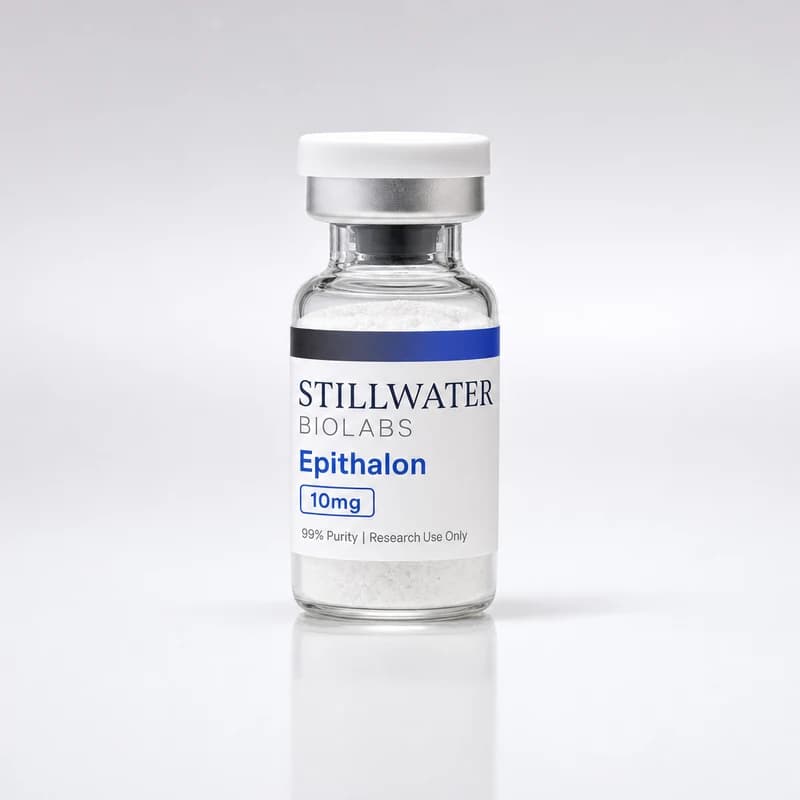
Epithalon
10mg – 50mg
A synthetic tetrapeptide studied for telomerase-activation assays and cellular-senescence research mechanisms.
 Popular
NAD+
500mg
Nicotinamide adenine dinucleotide (NAD+). A coenzyme reference standard supplied for in-vitro cell-culture and analytical method-development research. Not for use in any living organism.
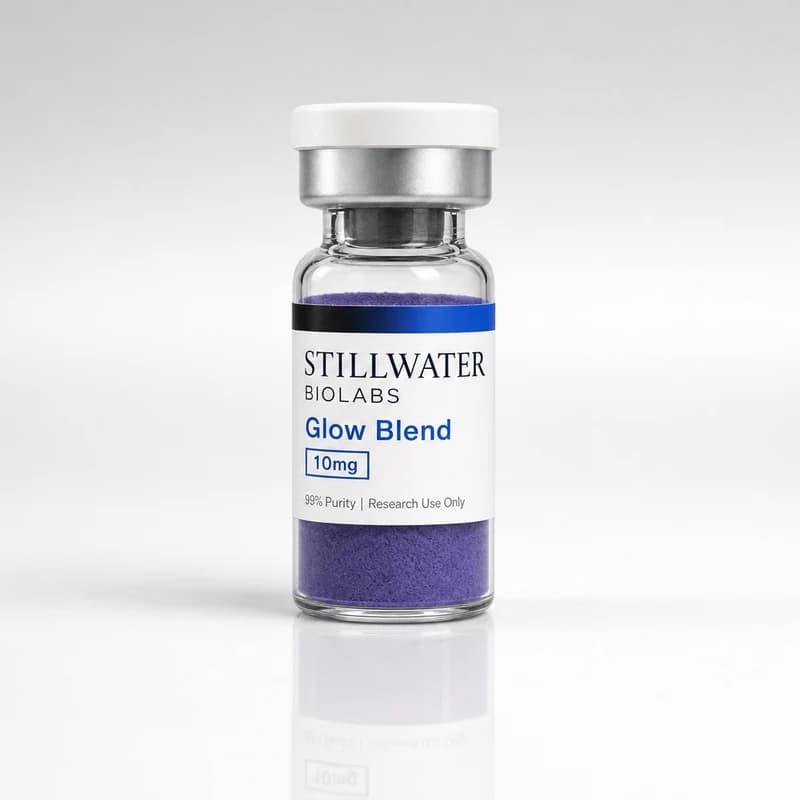
Glow Blend
70mg (10mg BPC + 10mg TB + 50mg GHK)
A lyophilized blend of BPC-157 (15 aa), TB-500 (43 aa), and GHK-Cu (copper tripeptide complex) supplied for in-vitro extracellular-matrix and copper-binding assays.
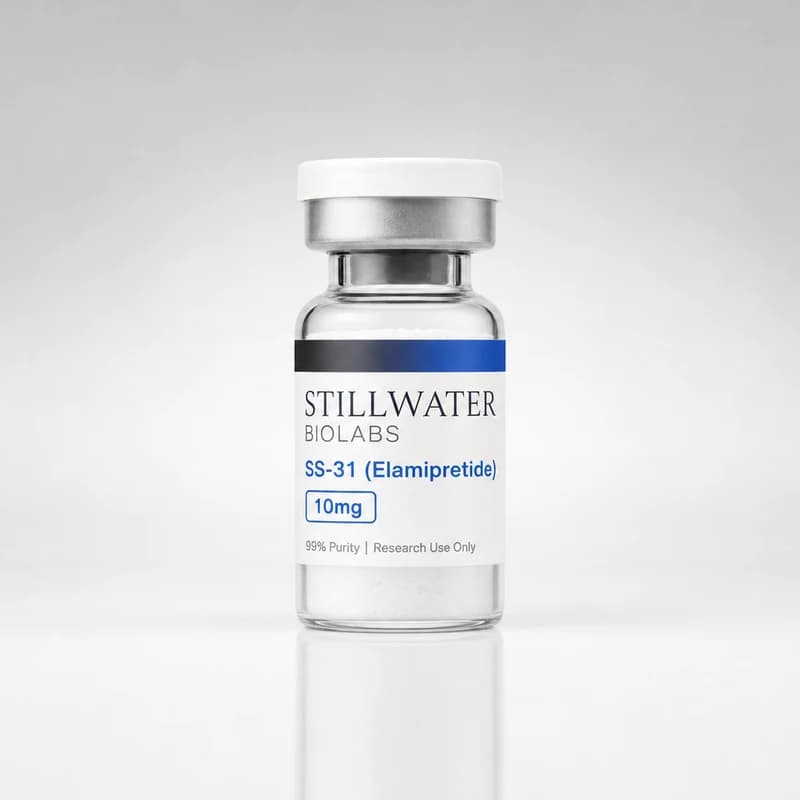
SS-31 (Elamipretide)
10mg – 50mg
A mitochondria-targeted peptide studied in preclinical cell-culture models of cellular energy regulation and mitochondrial-dysfunction research models.
Frequently Bought Together
GHK-Cu
50mg
Request pricing
Epithalon
10mg
Request pricing
NAD+
500mg
Request pricing