
≥99%
307297-39-8
390.35 g/mol
Epithalon
A synthetic tetrapeptide studied for telomerase-activation assays and cellular-senescence research mechanisms.
Minimum order: 10 units per compound, across any mix of sizes.



Pay with Visa, Mastercard, or AMEX · ACH bank transfer saves 5%
Cold-chain shipping via UPS, with tracking provided. Freight and lead time are confirmed on your quote.
Third-party tested
Supplied to qualified labs and institutional buyers. Institutional use & buyer eligibility
Characteristics
| Property | Value |
|---|---|
| Molecular Formula | C₁₄H₂₂N₄O₉ |
| CAS Number | 307297-39-8 |
| Molar Mass | 390.35 g/mol |
| Amino Acid Sequence | Ala-Glu-Asp-Gly (tetrapeptide) |
| Synonyms | Epitalon, Epithalone, AEDG peptide, Epithalamin synthetic analog |
| Physical Form | Lyophilized powder |
| Solubility | Soluble in water |
| Organoleptic Profile | White lyophilized powder; odorless |
| Storage Conditions | Store lyophilized at -20°C; reconstituted solution stable at 2-8°C for up to 14 days |
| Composition | Lyophilized Ala-Glu-Asp-Gly tetrapeptide |
How is Epithalon Used in Research?
Epithalon (also spelled Epitalon) is a synthetic tetrapeptide (Ala-Glu-Asp-Gly) based on the natural peptide epithalamin, which is produced by the pineal gland. It was developed by Professor Vladimir Khavinson at the St. Petersburg Institute of Bioregulation and Gerontology as part of decades-long research into short regulatory peptides and their role in aging. The primary research interest in Epithalon centers on its reported ability to activate the enzyme telomerase, which adds telomeric repeat sequences (TTAGGG) to the ends of chromosomes, potentially counteracting the progressive telomere shortening associated with cellular aging.
In vitro studies have demonstrated that Epithalon can activate telomerase in human somatic cells, including fetal and postnatal fibroblasts and endothelial cells. Khavinson and colleagues reported that treatment of human pulmonary fibroblast cultures with Epithalon induced telomerase activity, overcame the Hayflick limit of cellular divisions, and extended the proliferative lifespan of the cells by approximately 10 additional doublings. Additional studies reported modulation of melatonin secretion, with Epithalon restoring evening melatonin peaks in aged primates that had experienced age-related decline in pineal function.
Animal longevity studies conducted primarily by the Khavinson group reported that chronic Epithalon administration extended mean and maximum lifespan in several rodent and Drosophila models. Proposed mechanisms include not only telomerase activation but also antioxidant enzyme induction, modulation of neuroendocrine function through melatonin regulation, and activation of chromatin-associated gene expression. While these findings are primarily from a single research group, they have generated significant interest in the bioregulatory peptide field.
This product is supplied in a lyophilized form and requires reconstitution prior to laboratory handling. For research and laboratory use only. Not for human or veterinary consumption.
Areas of Study
Telomerase Activation
Investigated for induction of telomerase activity in human somatic cells, potentially extending the Hayflick limit of cellular proliferative lifespan.
Longevity Research
Chronic administration reported to extend mean and maximum lifespan in rodent and Drosophila models in studies by the Khavinson group.
Pineal Gland & Melatonin Regulation
Studied for restoration of evening melatonin secretion peaks in aged organisms that have experienced age-related pineal function decline.
Antioxidant Defense
Research reports induction of antioxidant enzymes and reduction of oxidative damage markers in aged animal models.
Cellular Senescence
Investigated for effects on cellular aging markers, including telomere length maintenance and expression of senescence-associated genes.
References
- [1]Khavinson VK, Bondarev IE, Butyugov AA. (2003). Epithalon peptide induces telomerase activity and telomere elongation in human somatic cells. Bulletin of Experimental Biology and Medicine, 135(6), 590-592.
- [2]Anisimov VN, Khavinson VK, Provinciali M, et al. (2003). Inhibitory effect of the peptide epitalon on the development of spontaneous mammary tumors in HER-2/neu transgenic mice. International Journal of Cancer, 101(1), 7-10.
- [3]Khavinson VK, Lezhava TA, Monaselidze JR, et al. (2003). Effects of Epithalon on the dynamics of telomere length in human fetal fibroblast cultures. Bulletin of Experimental Biology and Medicine, 135(5), 500-502.
- [4]Anisimov VN, Khavinson VK, Morozov VG. (2000). Immunomodulatory peptide L-Glu-L-Asp-L-Arg inhibits spontaneous carcinogenesis in rats. Biogerontology, 1(3), 259-267.
Disclaimer: The information provided is for research reference only and does not constitute medical advice. Products are sold strictly for in-vitro research use.
Certificate of Analysis (COA)
Third-Party Verified Quality
Every batch of Epithalon is independently tested by an A2LA-accredited (ISO 17025:2017) third-party laboratory using HPLC-UV/VIS for purity and measured quantity. Each COA carries the lab's signed report and a batch-specific lot number. We publish these results publicly so you can verify exactly what you're getting.
View Lab ResultsRelated Products
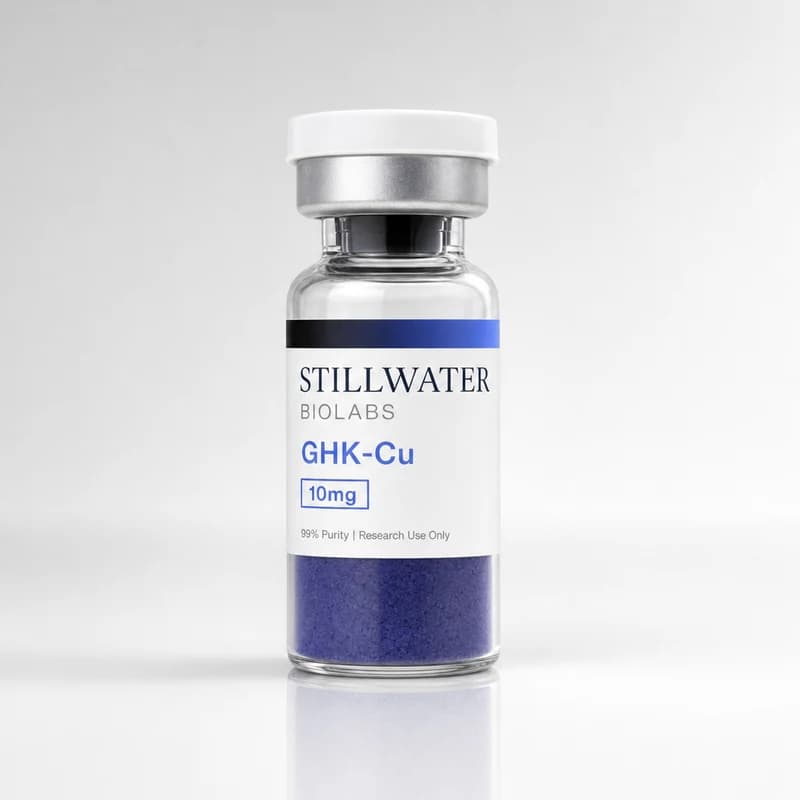 Popular
GHK-Cu
50mg – 100mg
Copper peptide GHK-Cu. Studied in collagen/ECM assay models, in-vitro wound-assay outcomes, and antioxidant-enzyme-induction research.
 Popular
NAD+
500mg
Nicotinamide adenine dinucleotide (NAD+). A coenzyme reference standard supplied for in-vitro cell-culture and analytical method-development research. Not for use in any living organism.
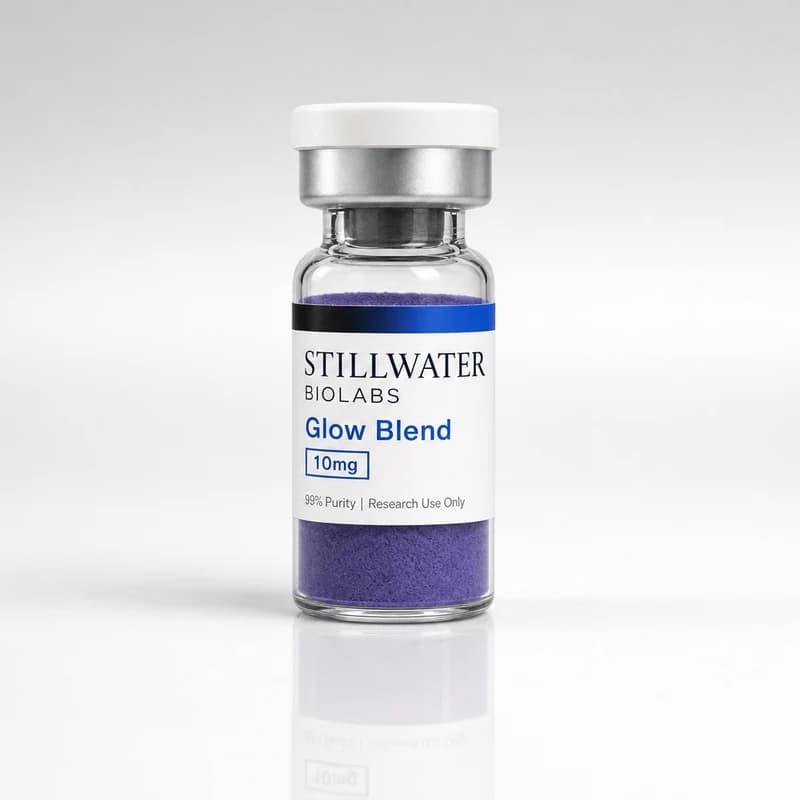
Glow Blend
70mg (10mg BPC + 10mg TB + 50mg GHK)
A lyophilized blend of BPC-157 (15 aa), TB-500 (43 aa), and GHK-Cu (copper tripeptide complex) supplied for in-vitro extracellular-matrix and copper-binding assays.
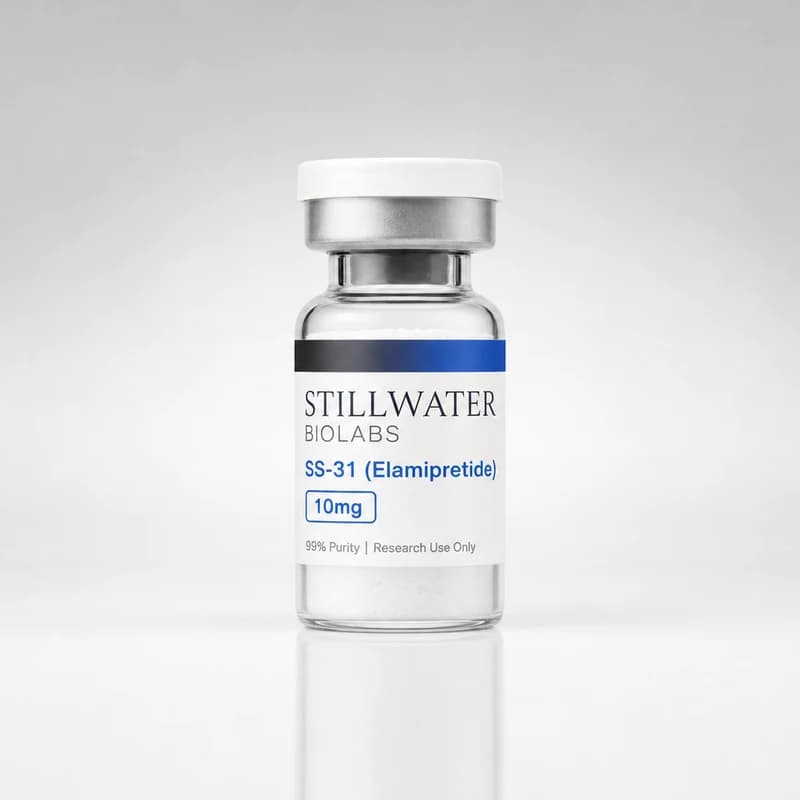
SS-31 (Elamipretide)
10mg – 50mg
A mitochondria-targeted peptide studied in preclinical cell-culture models of cellular energy regulation and mitochondrial-dysfunction research models.
Frequently Bought Together
Epithalon
10mg
Request pricing
GHK-Cu
50mg
Request pricing
NAD+
500mg
Request pricing