
≥99%
218949-48-5
5135.89 g/mol
Tesamorelin
A synthetic GHRH analog supplied as a lyophilized reference standard for in-vitro GHRH-receptor-binding assays, selectivity profiling, and analytical method development. Not for use in any living organism.
Minimum order: 10 units per compound, across any mix of sizes.



Pay with Visa, Mastercard, or AMEX · ACH bank transfer saves 5%
Cold-chain shipping via UPS, with tracking provided. Freight and lead time are confirmed on your quote.
Third-party tested
Supplied to qualified labs and institutional buyers. Institutional use & buyer eligibility
Characteristics
| Property | Value |
|---|---|
| Molecular Formula | C₂₂₁H₃₆₆N₇₂O₆₇S |
| CAS Number | 218949-48-5 |
| Molar Mass | 5135.89 g/mol |
| Amino Acid Sequence | Trans-3-hexenoic acid-modified GHRH (1-44)-NH₂ |
| Synonyms | Egrifta (brand), TH9507, Tesamorelin acetate |
| Physical Form | Lyophilized powder |
| Solubility | Soluble in aqueous buffer; reconstitute for in-vitro laboratory use only |
| Organoleptic Profile | White to off-white lyophilized cake or powder; odorless |
| Storage Conditions | Store lyophilized at 2-8°C; use reconstituted research solution promptly |
| Composition | Lyophilized tesamorelin acetate |
How is Tesamorelin Used in Research?
Tesamorelin is a synthetic analog of growth hormone-releasing hormone (GHRH) consisting of all 44 amino acids of endogenous GHRH with a trans-3-hexenoic acid modification at the N-terminus. This modification enhances the peptide's resistance to enzymatic degradation while preserving full biological activity at the GHRH receptor.
The mechanism involves physiological stimulation of pulsatile GH secretion from the anterior pituitary, which in turn increases hepatic IGF-1 production and promotes lipolysis-assay markers in visceral adipose cell cultures. Preclinical research in rodent models has characterized visceral-fat parameter shifts while subcutaneous adipose tissue, lean-mass readouts, and glucose-tolerance markers are preserved.
Research has also investigated tesamorelin for effects on hepatic-fat-content markers and cognitive-research preclinical models. These studies leverage the known relationship between the GH/IGF-1 axis and hippocampal neurogenesis, synaptic plasticity, and cerebrovascular function in preclinical research models.
This product is supplied in a lyophilized form and requires reconstitution prior to laboratory handling. For research and laboratory use only. Not for human or veterinary consumption.
Areas of Study
Visceral Adipose Tissue Research
Investigated in preclinical rodent models for visceral-adipose parameter shifts through enhanced GH-mediated lipolysis markers.
Growth Hormone Physiology
Studied as a GHRH analog that modulates pulsatile GH secretion in preclinical models, preserving feedback regulation through somatostatin and IGF-1.
Hepatic Lipid Metabolism
Investigated for hepatic-fat-content marker modulation through enhanced GH-mediated lipid-metabolism assays in preclinical steatosis research models.
Neuroprotective Assay Models
Preclinical research explores whether GH-axis modulation shifts cognitive-research markers through hippocampal neurogenesis assays and synaptic-plasticity models.
Preclinical Metabolic Parameters
Research examines visceral-fat-parameter shifts in rodent models while lean-mass and subcutaneous-adipose readouts are preserved, unique to GHRH-based preclinical approaches.
References
- [1]Ferdinando C, Bowers CY. (2010). Growth hormone-releasing hormone (GHRH) analogs stimulate GH secretion and have metabolic effects in animal models. Growth Hormone & IGF Research, 20(3), 186-193.
- [2]Gaylinn BD, Thorner MO. (2001). GHRH receptors, secretagogue receptors, and GH secretion. Growth Hormone & IGF Research, 11(Suppl A), S35-S38.
- [3]Murray RD, Shalet SM. (2000). Growth hormone: current and future therapeutic applications. Expert Opinion on Pharmacotherapy, 1(5), 975-990.
Disclaimer: The information provided is for research reference only and does not constitute medical advice. Products are sold strictly for in-vitro research use.
Certificate of Analysis (COA)
Third-Party Verified Quality
Every batch of Tesamorelin is independently tested by an A2LA-accredited (ISO 17025:2017) third-party laboratory using HPLC-UV/VIS for purity and measured quantity. Each COA carries the lab's signed report and a batch-specific lot number. We publish these results publicly so you can verify exactly what you're getting.
View Lab ResultsRelated Products
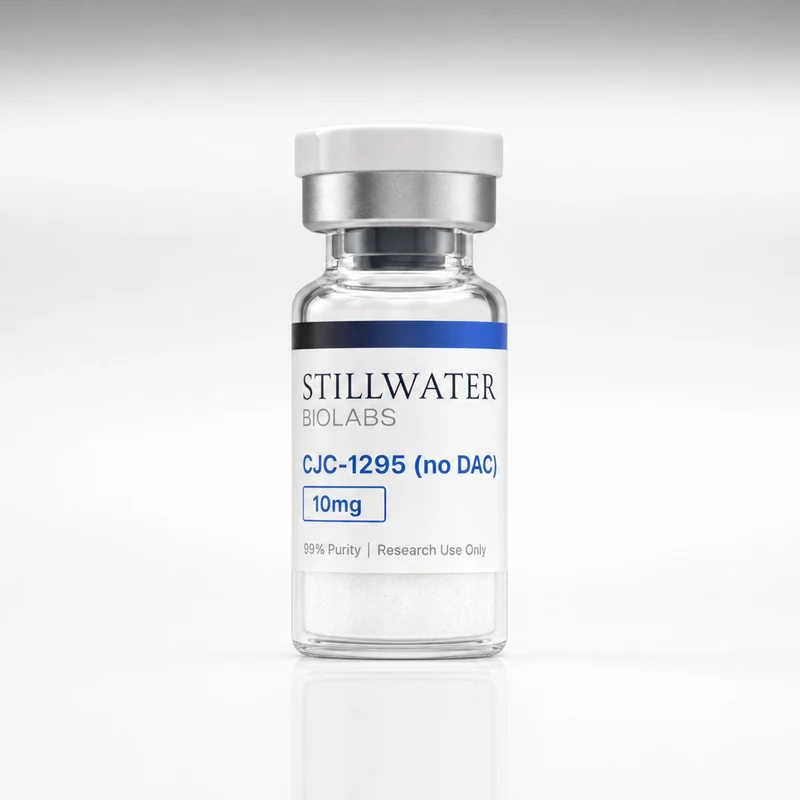
CJC-1295 (no DAC)
5mg – 10mg
CJC-1295 is a 30-amino acid synthetic GHRH analog with a Drug Affinity Complex modification, supplied for in-vitro receptor-binding and half-life characterization studies.
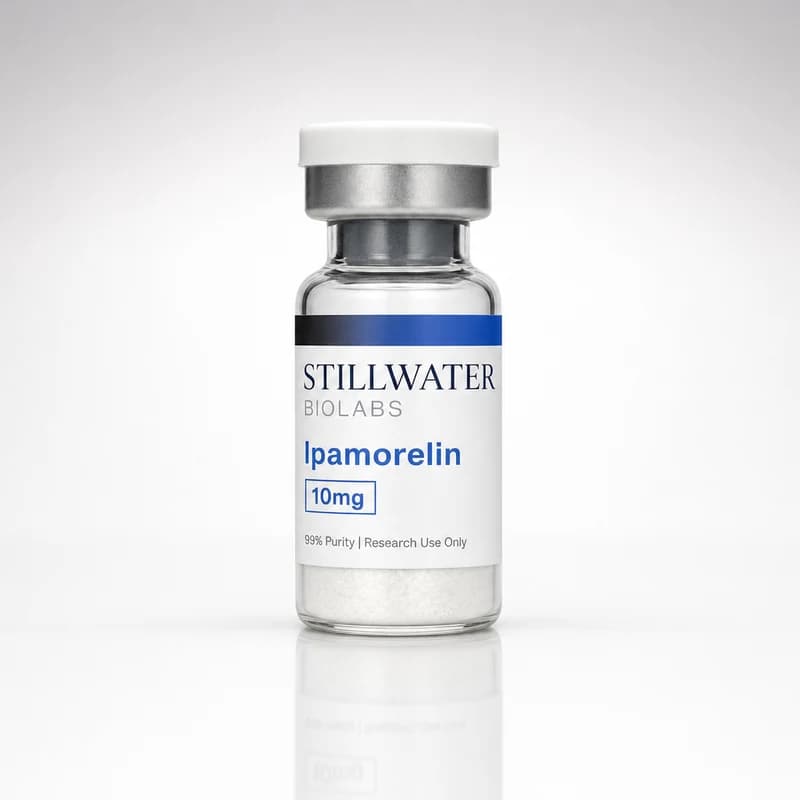
Ipamorelin
5mg – 10mg
Ipamorelin is a 5-amino acid synthetic peptide growth hormone secretagogue supplied for in-vitro GHS-R1a receptor-binding assays and selectivity profiling.
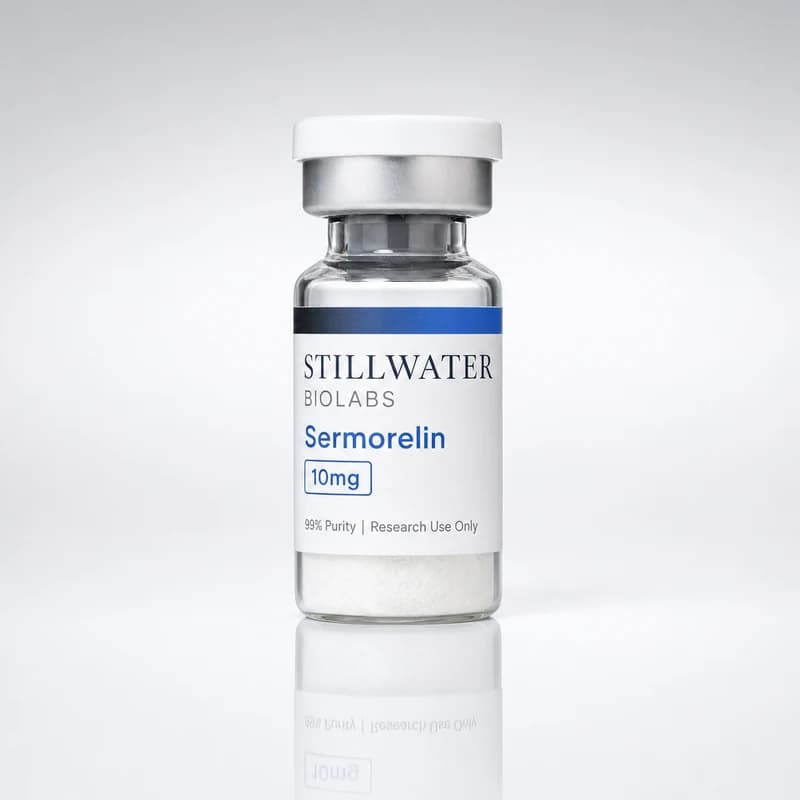
Sermorelin
5mg – 10mg
Sermorelin is a 29-amino acid synthetic peptide analog of GHRH(1-29) supplied for in-vitro receptor-activation assays, structural analysis, and analytical method development.
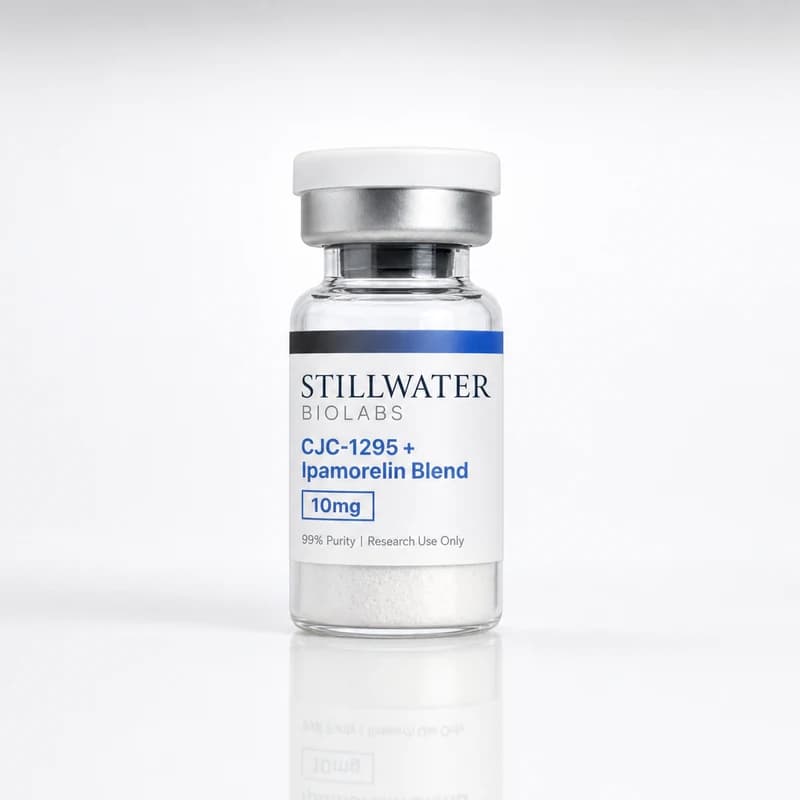
CJC-1295 + Ipamorelin Blend
10mg (5mg/5mg)
A lyophilized blend combining CJC-1295 no DAC (30 aa, 3367.97 g/mol) and Ipamorelin (5 aa, 711.85 g/mol) for in-vitro receptor co-activation studies.
Frequently Bought Together
Tesamorelin
5mg
Request pricing
CJC-1295 (no DAC)
5mg
Request pricing
Ipamorelin
5mg
Request pricing