
≥99%
374675-21-5
1302.41 g/mol
Kisspeptin-10
A decapeptide fragment of kisspeptin studied for reproductive function and GnRH signaling.
Minimum order: 10 units per compound, across any mix of sizes.



Pay with Visa, Mastercard, or AMEX · ACH bank transfer saves 5%
Cold-chain shipping via UPS, with tracking provided. Freight and lead time are confirmed on your quote.
Third-party tested
Supplied to qualified labs and institutional buyers. Institutional use & buyer eligibility
Characteristics
| Property | Value |
|---|---|
| Molecular Formula | C₆₃H₈₃N₁₃O₁₄ |
| CAS Number | 374675-21-5 |
| Molar Mass | 1302.41 g/mol |
| Amino Acid Sequence | Tyr-Asn-Trp-Asn-Ser-Phe-Gly-Leu-Arg-Phe-NH₂ |
| Synonyms | Kisspeptin-10, Metastin (45-54), KP-10, KISS1 (112-121) |
| Physical Form | Lyophilized powder |
| Solubility | Soluble in water and DMSO |
| Organoleptic Profile | White lyophilized powder; odorless |
| Purity | ≥98% by HPLC |
| Storage Conditions | Store lyophilized at -20°C; reconstituted solution stable at 2-8°C for up to 7 days |
How is Kisspeptin-10 Used in Research?
Kisspeptin-10 is the C-terminal decapeptide fragment of kisspeptin (also known as metastin), the endogenous ligand of the GPR54 (KISS1R) receptor. Kisspeptins are products of the KISS1 gene and play a central role in the neuroendocrine regulation of reproduction through stimulation of gonadotropin-releasing hormone (GnRH) neurons in the hypothalamus. The discovery of kisspeptin signaling in 2003 revolutionized reproductive neuroendocrinology by identifying the upstream signal responsible for activating the hypothalamic-pituitary-gonadal (HPG) axis at puberty and maintaining its function in adulthood.
Kisspeptin-10 retains full biological activity at the KISS1R receptor and is the minimal active fragment capable of stimulating GnRH release. Administration of kisspeptin-10 potently stimulates luteinizing hormone (LH) and follicle-stimulating hormone (FSH) secretion across multiple species in research settings. Preclinical research has explored its use as a diagnostic tool for assessing HPG axis function and as a potential preclinical agent in models of reproductive dysfunction, including hypothalamic amenorrhea and hypogonadotropic hypogonadism.
Research has also revealed roles for kisspeptin signaling beyond reproduction, including regulation of placental function during pregnancy, modulation of metabolic pathways, and anti-metastatic activity (the KISS1 gene was originally identified as a metastasis suppressor). Studies continue to explore the preclinical potential of kisspeptin analogs in reproductive research, infertility research, and in vitro fertilization research protocols as alternatives to conventional GnRH agonist triggers.
This product is supplied in a lyophilized form and requires reconstitution prior to laboratory handling. For research and laboratory use only. Not for human or veterinary consumption.
Areas of Study
Reproductive Function
Central regulator of GnRH neuron activation; potently stimulates LH and FSH secretion for HPG axis assessment and preclinical modulation.
GnRH Signaling
Acts as the upstream activator of GnRH neurons via KISS1R (GPR54) receptor, the gateway signal for reproductive hormone release.
HPG Axis Research
Investigated as a diagnostic tool for HPG axis function and as a preclinical agent in hypogonadotropic conditions and hypothalamic amenorrhea.
Puberty Research
Kisspeptin signaling is the critical trigger for pubertal onset; loss-of-function mutations cause absent puberty in animal models.
Fertility & IVF Research
Explored as an alternative to GnRH agonists for oocyte maturation trigger in IVF protocols, with reduced ovarian hyperstimulation risk.
References
- [1]de Roux N, Genin E, Carel JC, et al. (2003). Hypogonadotropic hypogonadism due to loss of function of the KiSS1-derived peptide receptor GPR54. Proceedings of the National Academy of Sciences, 100(19), 10972-10976.
- [2]Dhillo WS, Chaudhri OB, Patterson M, et al. (2005). Kisspeptin-54 stimulates the hypothalamic-pituitary gonadal axis in human males. Journal of Clinical Endocrinology & Metabolism, 90(12), 6609-6615.
- [3]Seminara SB, Messager S, Chatzidaki EE, et al. (2003). The GPR54 gene as a regulator of puberty. New England Journal of Medicine, 349(17), 1614-1627.
- [4]Abbara A, Jayasena CN, Christopoulos G, et al. (2015). Efficacy of kisspeptin-54 to trigger oocyte maturation in women at high risk of ovarian hyperstimulation syndrome (OHSS) during in vitro fertilization (IVF) therapy. Journal of Clinical Endocrinology & Metabolism, 100(9), 3322-3331.
- [5]Oakley AE, Clifton DK, Steiner RA. (2009). Kisspeptin signaling in the brain. Endocrine Reviews, 30(6), 713-743.
Disclaimer: The information provided is for research reference only and does not constitute medical advice. Products are sold strictly for in-vitro research use.
Certificate of Analysis (COA)
Third-Party Verified Quality
Every batch of Kisspeptin-10 is independently tested by an A2LA-accredited (ISO 17025:2017) third-party laboratory using HPLC-UV/VIS for purity and measured quantity. Each COA carries the lab's signed report and a batch-specific lot number. We publish these results publicly so you can verify exactly what you're getting.
View Lab ResultsRelated Products
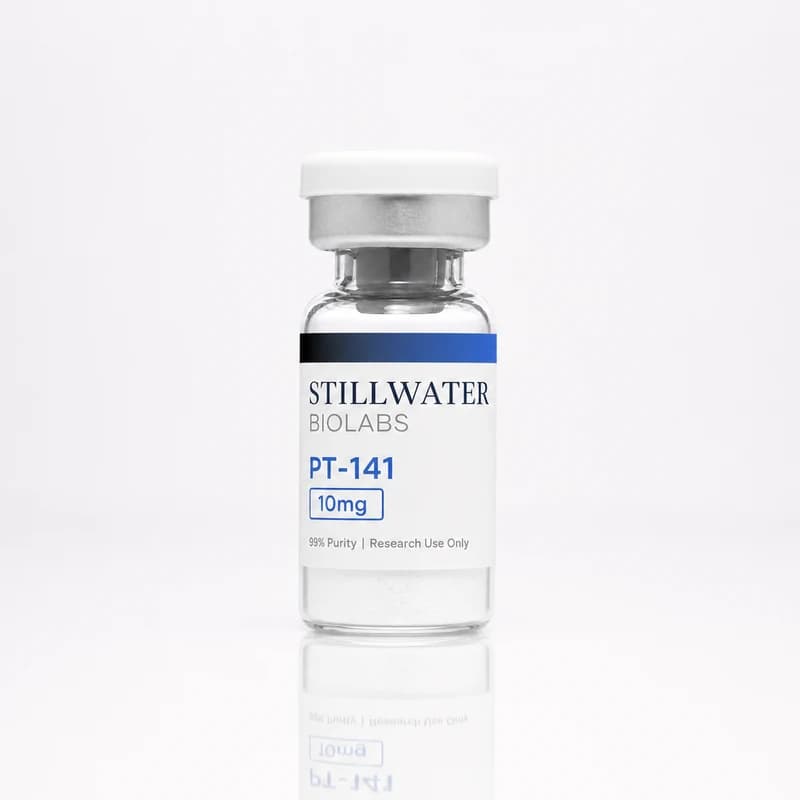
PT-141
10mg
Bremelanotide. A melanocortin (MC1R/MC4R) receptor agonist supplied as a lyophilized reference standard for in-vitro receptor-binding assays and analytical characterization. Not for use in any living organism.
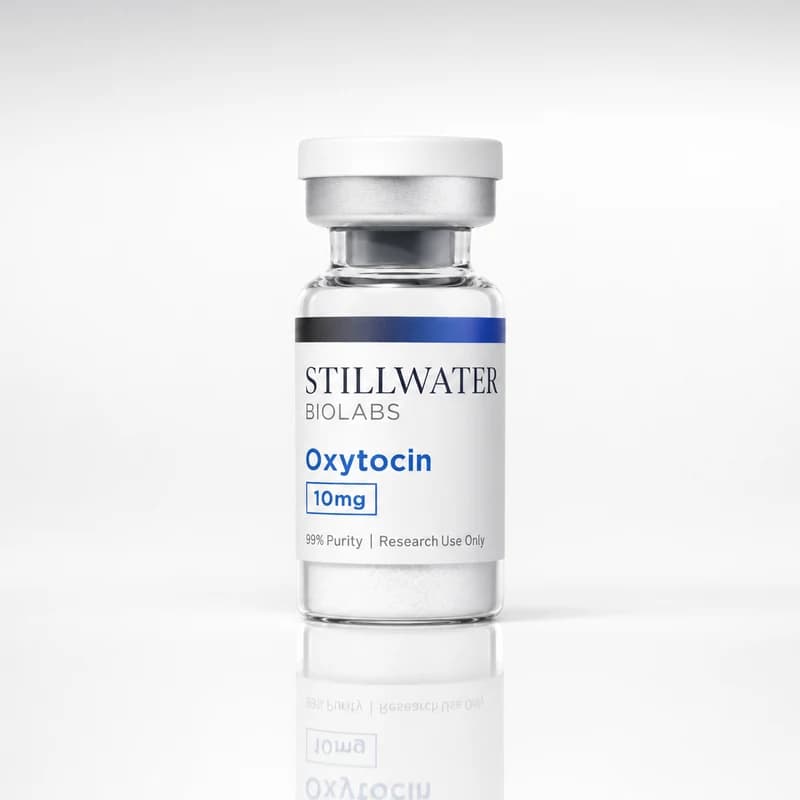
Oxytocin
5mg
Oxytocin is a 9-amino acid cyclic neuropeptide supplied as a lyophilized reference standard for in-vitro receptor-binding assays, structural studies, and analytical method validation. Not for use in any living organism.
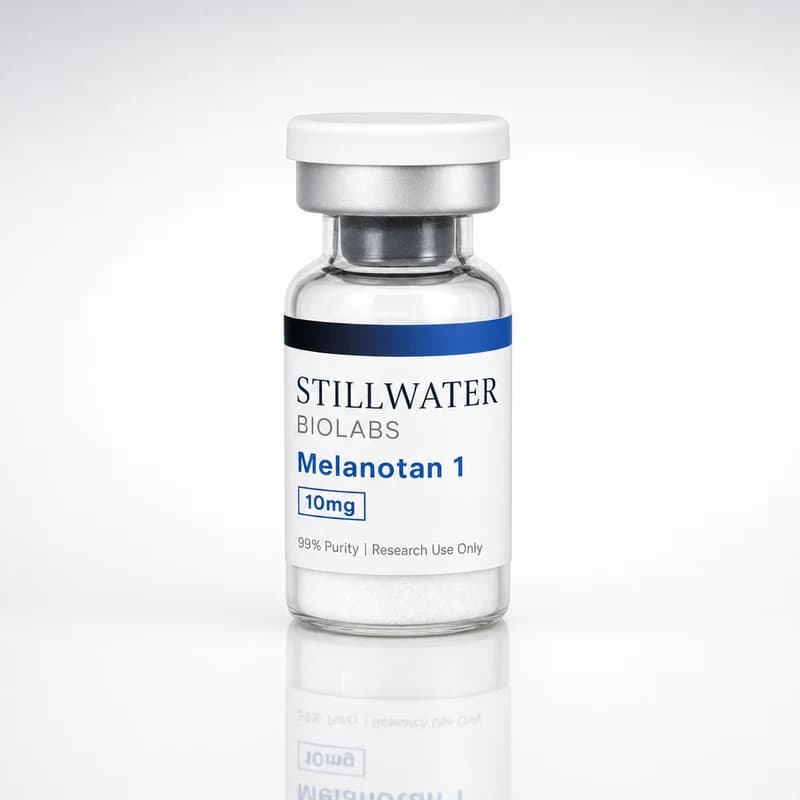
Melanotan 1
10mg
A synthetic α-MSH analog supplied as a lyophilized reference standard for in-vitro melanocortin-receptor research (MC1R-selective profile in preclinical models).
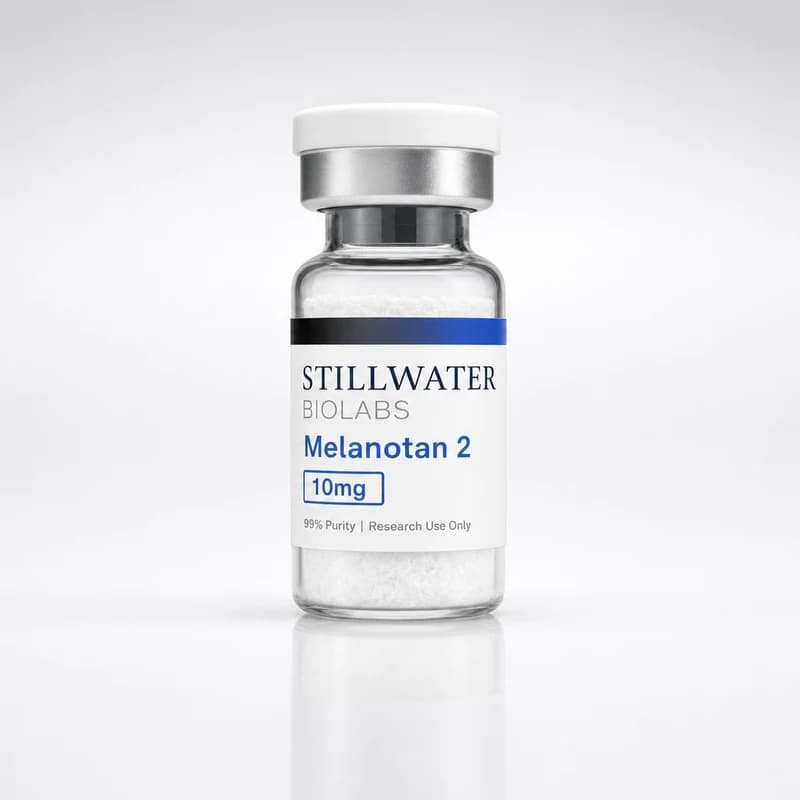
Melanotan 2
10mg
A cyclic synthetic α-MSH analog supplied as a lyophilized reference standard for in-vitro melanocortin-receptor research across MC1R / MC3R / MC4R selectivity panels.
Frequently Bought Together
Kisspeptin-10
5mg
Request pricing
PT-141
10mg
Request pricing
Oxytocin
5mg
Request pricing