
≥99%
40077-57-4
3326.82 g/mol
VIP (Vasoactive Intestinal Peptide)
A 28-amino acid neuropeptide studied in preclinical models for immune-regulation, vasodilation assays, and neuroprotective assay models.
Minimum order: 10 units per compound, across any mix of sizes.



Pay with Visa, Mastercard, or AMEX · ACH bank transfer saves 5%
Cold-chain shipping via UPS, with tracking provided. Freight and lead time are confirmed on your quote.
Third-party tested
Supplied to qualified labs and institutional buyers. Institutional use & buyer eligibility
Characteristics
| Property | Value |
|---|---|
| Molecular Formula | C₁₄₇H₂₃₈N₄₄O₄₂S |
| CAS Number | 40077-57-4 |
| Molar Mass | 3326.82 g/mol |
| Amino Acid Sequence | His-Ser-Asp-Ala-Val-Phe-Thr-Asp-Asn-Tyr-Thr-Arg-Leu-Arg-Lys-Gln-Met-Ala-Val-Lys-Lys-Tyr-Leu-Asn-Ser-Ile-Leu-Asn |
| Synonyms | Vasoactive Intestinal Peptide, VIP-28, Aviptadil |
| Physical Form | Lyophilized powder |
| Solubility | Soluble in water and dilute acetic acid |
| Organoleptic Profile | White lyophilized powder; odorless |
| Purity | ≥97% by HPLC |
| Storage Conditions | Store lyophilized at -20°C; protect from light; reconstituted solution stable at 2-8°C for up to 7 days |
How is VIP (Vasoactive Intestinal Peptide) Used in Research?
Vasoactive Intestinal Peptide (VIP) is a 28-amino acid neuropeptide originally isolated from porcine duodenum by Said and Mutt in 1970. It belongs to the glucagon-secretin superfamily and signals primarily through two G-protein coupled receptors, VPAC1 and VPAC2, which are widely distributed throughout the central and peripheral nervous systems, immune tissues, and the gastrointestinal tract. VIP functions as a neurotransmitter, neuromodulator, and immunoregulatory factor with diverse physiological roles including vasodilation, smooth muscle relaxation, and circadian-rhythm regulation.
In immunological research, VIP has been extensively studied for its inflammatory-marker modulation and immunomodulatory profile in preclinical studies. It has been shown to inhibit the production of pro-inflammatory cytokine markers (TNF-α, IL-6, IL-12) by macrophages and dendritic cells while promoting the generation of regulatory T cells in research models. VIP also modulates Th1/Th2 balance by shifting immune responses toward a Th2 phenotype in preclinical systems. These properties have generated research interest in autoimmune and inflammatory research models.
VIP's neuroprotective assay model activity has been investigated in models of neurodegeneration, stroke, and traumatic brain injury research models. The peptide promotes neuronal survival in preclinical systems through VPAC receptor-mediated activation of cAMP/PKA and PI3K/Akt signaling pathways. In the gastrointestinal system, VIP regulates motility, secretion, and blood-flow markers in research models, and has been studied in gastrointestinal preclinical models of inflammatory bowel disease and functional gastrointestinal disorders.
This product is supplied in a lyophilized form and requires reconstitution prior to laboratory handling. For research and laboratory use only. Not for human or veterinary consumption.
Areas of Study
Vasodilation & Cardiovascular Function
Potent vasodilator acting through VPAC receptors on vascular smooth muscle, with research applications in pulmonary hypertension models.
Neuroprotective Assay Models
Investigated for promotion of neuronal survival in preclinical systems via cAMP/PKA and PI3K/Akt signaling in models of neurodegeneration and ischemic injury.
Immune Regulation
Studied for suppression of pro-inflammatory cytokines and promotion of regulatory T-cell differentiation in autoimmune research models.
Gastrointestinal Function
Regulates GI motility, secretion, and mucosal blood flow; investigated in inflammatory bowel disease models.
Circadian Rhythm Research
Key signaling peptide in the suprachiasmatic nucleus involved in synchronization of circadian clock neurons.
References
- [1]Said SI, Mutt V. (1970). Polypeptide with broad biological activity: isolation from small intestine. Science, 169(3951), 1217-1218.
- [2]Delgado M, Pozo D, Ganea D. (2004). The significance of vasoactive intestinal peptide in immunomodulation. Pharmacological Reviews, 56(2), 249-290.
- [3]Gonzalez-Rey E, Fernandez-Martin A, Chorny A, Delgado M. (2006). Vasoactive intestinal peptide induces CD4+,CD25+ T regulatory cells with therapeutic effect in collagen-induced arthritis. Arthritis & Rheumatism, 54(3), 864-876.
- [4]Brenneman DE. (2007). Neuroprotection: a comparative view of vasoactive intestinal peptide and pituitary adenylate cyclase-activating polypeptide. Peptides, 28(9), 1720-1726.
- [5]Abad C, Martinez C, Juarranz MG, et al. (2003). Therapeutic effects of vasoactive intestinal peptide in the trinitrobenzene sulfonic acid mice model of Crohn's disease. Gastroenterology, 124(4), 961-971.
Disclaimer: The information provided is for research reference only and does not constitute medical advice. Products are sold strictly for in-vitro research use.
Certificate of Analysis (COA)
Third-Party Verified Quality
Every batch of VIP (Vasoactive Intestinal Peptide) is independently tested by an A2LA-accredited (ISO 17025:2017) third-party laboratory using HPLC-UV/VIS for purity and measured quantity. Each COA carries the lab's signed report and a batch-specific lot number. We publish these results publicly so you can verify exactly what you're getting.
View Lab ResultsRelated Products
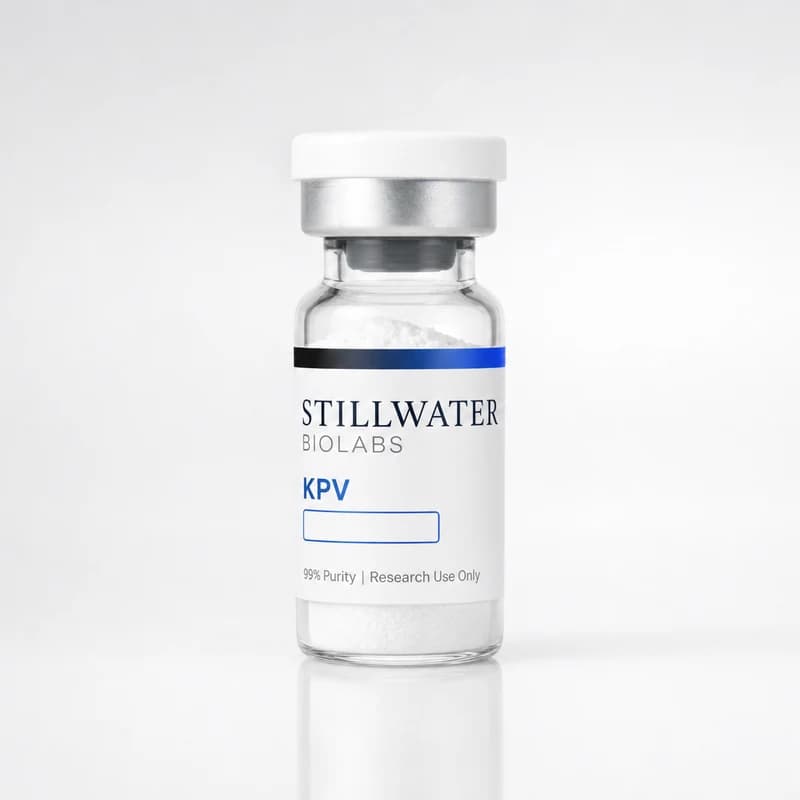
KPV
10mg
A synthetic tripeptide fragment derived from alpha-MSH studied for immune-signaling and inflammatory-marker modulation in preclinical studies.
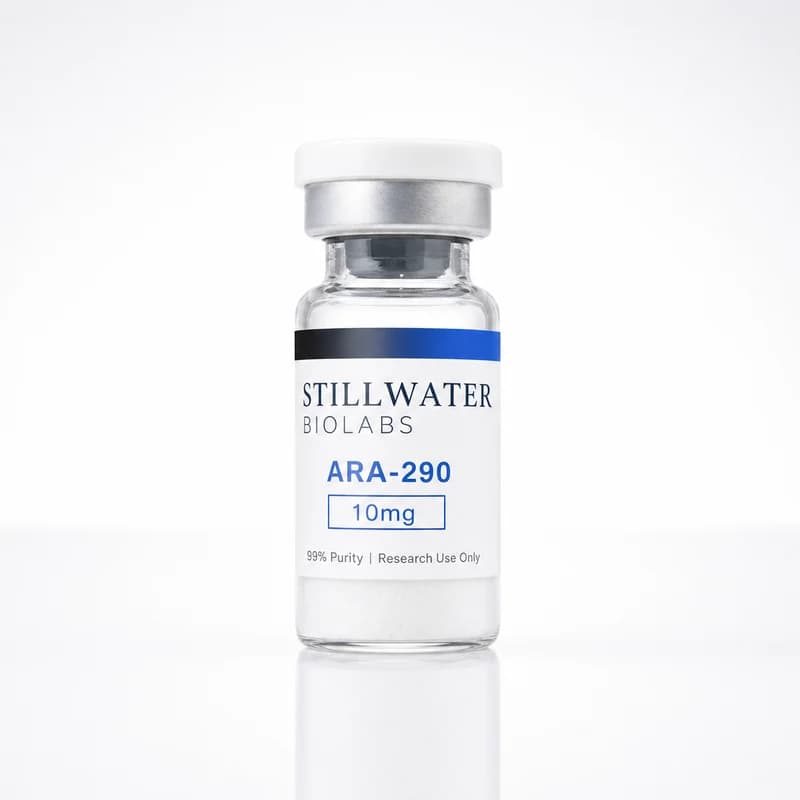
ARA-290
10mg
ARA-290 is an 11-amino acid synthetic peptide derived from erythropoietin supplied as a lyophilized research standard for in-vitro receptor-binding assays and structural characterization. Not for use in any living organism.
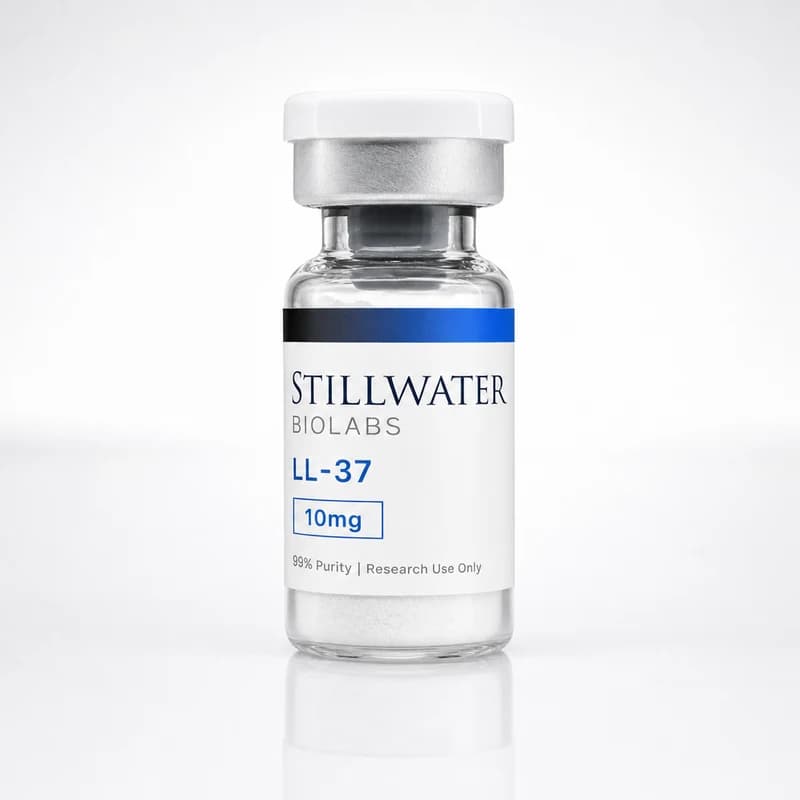
LL-37
5mg
Cathelicidin-derived antimicrobial peptide (37 amino acids) supplied as a lyophilized reference standard for in-vitro innate-immune and antimicrobial-research workflows.
Frequently Bought Together
VIP (Vasoactive Intestinal Peptide)
10mg
Request pricing
KPV
10mg
Request pricing
ARA-290
10mg
Request pricing