
≥99%
1627580-64-6
2174.60 g/mol
MOTS-c
A mitochondrial-derived peptide studied for cellular energy regulation and metabolic signaling.
Minimum order: 10 units per compound, across any mix of sizes.



Pay with Visa, Mastercard, or AMEX · ACH bank transfer saves 5%
Cold-chain shipping via UPS, with tracking provided. Freight and lead time are confirmed on your quote.
Third-party tested
Supplied to qualified labs and institutional buyers. Institutional use & buyer eligibility
Characteristics
| Property | Value |
|---|---|
| Molecular Formula | C₁₀₁H₁₅₂N₂₈O₂₂S₂ |
| CAS Number | 1627580-64-6 |
| Molar Mass | 2174.60 g/mol |
| Amino Acid Sequence | Met-Arg-Trp-Gln-Glu-Met-Gly-Tyr-Ile-Phe-Tyr-Pro-Arg-Lys-Leu-Arg (16 amino acids) |
| Synonyms | MOTS-c, Mitochondrial ORF of the 12S rRNA type-c |
| Physical Form | Lyophilized powder |
| Solubility | Soluble in water and DMSO |
| Organoleptic Profile | White to off-white lyophilized powder; odorless |
| Purity | ≥98% by HPLC |
| Storage Conditions | Store lyophilized at -20°C; reconstituted solution stable at 2-8°C for up to 7 days |
How is MOTS-c Used in Research?
MOTS-c (Mitochondrial Open Reading Frame of the 12S rRNA type-c) is a 16-amino acid peptide encoded by the mitochondrial genome, discovered by Lee and colleagues at the University of Southern California in 2015. It was the first mitochondrial-derived peptide shown to have systemic metabolic effects, representing a paradigm shift in understanding mitochondrial signaling. MOTS-c is encoded within the 12S rRNA gene of mitochondrial DNA and is one of several mitochondrial-derived peptides (MDPs) that function as retrograde signals from mitochondria to the nucleus and other cellular compartments.
The primary in-vitro effects of MOTS-c involve activation of the AMPK (5' adenosine monophosphate-activated protein kinase) signaling pathway, a master regulator of cellular energy homeostasis. Research has characterized MOTS-c for glucose-uptake and fatty-acid-oxidation assay markers in rodent cell-culture models of metabolic-parameter research. The peptide has been described as an "exercise mimetic" due to its ability to activate metabolic pathways that are typically stimulated by physical exercise, including AMPK-dependent and folate-methionine cycle pathways.
More recent research has revealed that MOTS-c translocates to the nucleus under conditions of metabolic stress, where it regulates gene expression through interaction with antioxidant response elements (AREs). Studies have also identified correlations between circulating MOTS-c levels and physical fitness, aging, and metabolic disease states, suggesting a role as a mitochondrial-encoded hormone (mitokine) that communicates cellular metabolic status to systemic physiology.
This product is supplied in a lyophilized form and requires reconstitution prior to laboratory handling. For research and laboratory use only. Not for human or veterinary consumption.
Areas of Study
Mitochondrial Function
First mitochondrial-derived peptide shown to have systemic effects; represents retrograde mitochondrial-to-nuclear signaling.
Metabolic Regulation
Characterized in preclinical cell-culture models for glucose-uptake and fatty-acid-oxidation assay markers through AMPK pathway activation.
Exercise Mimetic Research
Activates metabolic pathways typically stimulated by physical exercise, including AMPK-dependent energy homeostasis mechanisms.
AMPK Signaling
Central mechanism involves activation of 5' AMP-activated protein kinase, a master regulator of cellular energy balance.
Aging & Mitokine Biology
Circulating levels correlate with age and metabolic health, suggesting a role as a mitochondrial-encoded hormonal signal.
References
- [1]Lee C, Zeng J, Drew BG, et al. (2015). The mitochondrial-derived peptide MOTS-c promotes metabolic homeostasis and reduces obesity and insulin resistance. Cell Metabolism, 21(3), 443-454.
- [2]Kim SJ, Xiao J, Wan J, et al. (2017). Mitochondrial-derived peptides as novel regulators of metabolism. Journal of Physiology, 595(21), 6613-6621.
- [3]Reynolds JC, Lai RW, Woodhead JST, et al. (2021). MOTS-c is an exercise-induced mitochondrial-encoded regulator of age-dependent physical decline and muscle homeostasis. Nature Communications, 12(1), 470.
- [4]Kim KH, Son JM, Benayoun BA, Lee C. (2018). The mitochondrial-encoded peptide MOTS-c translocates to the nucleus to regulate nuclear gene expression in response to metabolic stress. Cell Metabolism, 28(3), 516-524.
Disclaimer: The information provided is for research reference only and does not constitute medical advice. Products are sold strictly for in-vitro research use.
Certificate of Analysis (COA)
Third-Party Verified Quality
Every batch of MOTS-c is independently tested by an A2LA-accredited (ISO 17025:2017) third-party laboratory using HPLC-UV/VIS for purity and measured quantity. Each COA carries the lab's signed report and a batch-specific lot number. We publish these results publicly so you can verify exactly what you're getting.
View Lab ResultsRelated Products
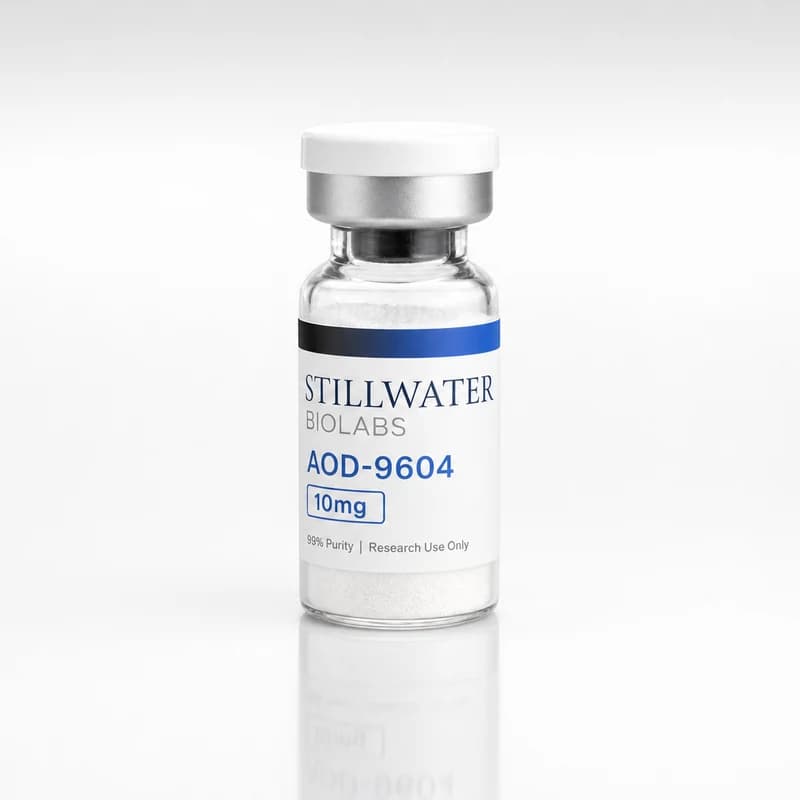
AOD-9604
5mg
AOD-9604 is a modified C-terminal fragment of human growth hormone supplied as a lyophilized research standard for in-vitro lipolysis assays and receptor-binding studies. Not for use in any living organism.
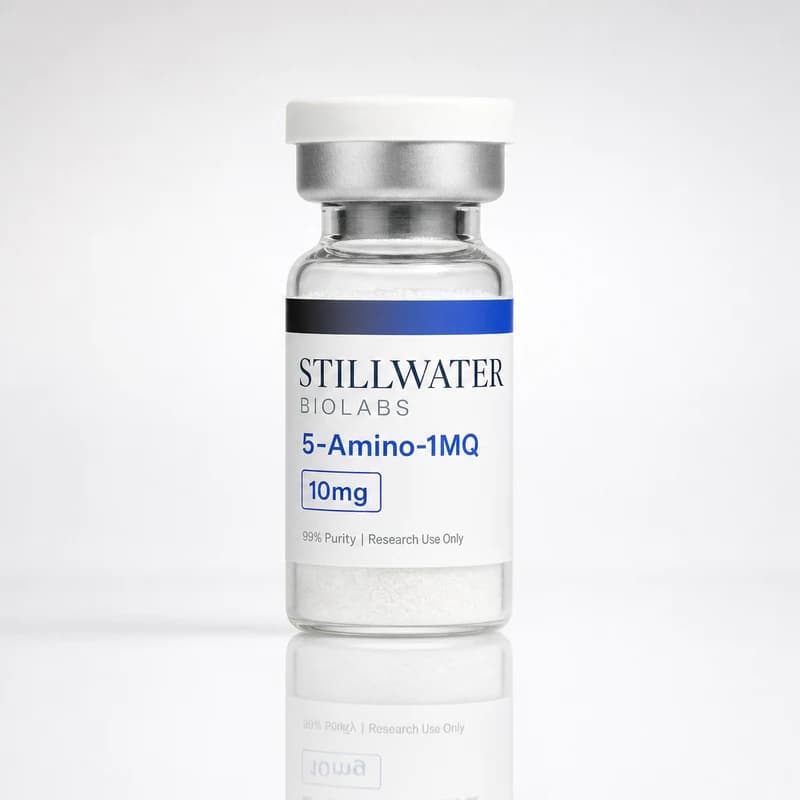
5-Amino-1MQ
5mg
A small molecule NNMT inhibitor studied for cellular metabolism and NAD+ pathway regulation.
Frequently Bought Together
MOTS-c
10mg
Request pricing
AOD-9604
5mg
Request pricing
5-Amino-1MQ
5mg
Request pricing