
≥99%
80714-61-0
813.93 g/mol
Semax
A synthetic heptapeptide derived from ACTH studied in neuroprotective assay models and cognitive-research preclinical models.
Minimum order: 10 units per compound, across any mix of sizes.



Pay with Visa, Mastercard, or AMEX · ACH bank transfer saves 5%
Cold-chain shipping via UPS, with tracking provided. Freight and lead time are confirmed on your quote.
Third-party tested
Supplied to qualified labs and institutional buyers. Institutional use & buyer eligibility
Characteristics
| Property | Value |
|---|---|
| Molecular Formula | C₃₇H₅₁N₉O₁₀S |
| CAS Number | 80714-61-0 |
| Molar Mass | 813.93 g/mol |
| Amino Acid Sequence | Met-Glu-His-Phe-Pro-Gly-Pro |
| Synonyms | Semax, ACTH (4-10) analog, Heptapeptide Semax |
| Physical Form | Lyophilized powder |
| Solubility | Soluble in water and physiological saline |
| Organoleptic Profile | White lyophilized powder; odorless |
| Purity | ≥98% by HPLC |
| Storage Conditions | Store lyophilized at -20°C; protect from light; reconstituted solution stable at 2-8°C for up to 7 days |
How is Semax Used in Research?
Semax is a synthetic heptapeptide analog of the ACTH (4-10) fragment (Met-Glu-His-Phe-Pro-Gly-Pro), developed at the Institute of Molecular Genetics of the Russian Academy of Sciences. Unlike the parent ACTH molecule, Semax lacks hormonal (steroidogenic) activity while retaining and enhancing the neurotropic effects associated with the ACTH (4-10) sequence in preclinical models. The addition of the Pro-Gly-Pro C-terminal tripeptide confers resistance to enzymatic degradation and extends the peptide's biological activity in research models.
Preclinical research has characterized Semax's activity in cognitive-research preclinical models in animals, including learning, memory, and attention research markers. A key mechanism involves the upregulation of brain-derived neurotrophic factor (BDNF) and nerve growth factor (NGF) expression in preclinical brain tissue, particularly in the hippocampus and prefrontal cortex. Studies have also shown that Semax modulates dopaminergic, serotonergic, and cholinergic neurotransmitter systems in preclinical systems.
Significant research has investigated Semax in neuroprotective assay models of ischemic stroke. Studies have demonstrated infarct-volume parameter modulation, improvements in neurological research readouts, and modulation of gene-expression patterns related to inflammatory and apoptotic markers following cerebral ischemia in research models. The peptide's ability to cross the blood-brain barrier via intranasal administration has facilitated preclinical research applications.
This product is supplied in a lyophilized form and requires reconstitution prior to laboratory handling. For research and laboratory use only. Not for human or veterinary consumption.
Areas of Study
Neuroprotective Assay Models
Demonstrated infarct-volume parameter modulation and neurological readouts in ischemic stroke research models through anti-apoptotic and inflammatory-marker modulation mechanisms.
Cognitive Enhancement
Investigated for improvements in learning, memory consolidation, and attention through modulation of multiple neurotransmitter systems.
BDNF Expression
Research shows upregulation of brain-derived neurotrophic factor and nerve growth factor in hippocampal and cortical regions.
Stroke Research Models
Extensively studied in cerebral ischemia research models with reported neuroprotective assay model activity and modulation of post-ischemic gene expression.
Neurotransmitter Modulation
Influences dopaminergic, serotonergic, and cholinergic pathways without the steroidogenic activity of the parent ACTH molecule.
References
- [1]Ashmarin IP, Nezavibatko VN, Levitskaya NG, et al. (1997). Design and investigation of an ACTH 4-10 analogue lacking D-amino acids and possessing nootropic properties. Neuroscience Research Communications, 21(2), 105-112.
- [2]Dolotov OV, Karpenko EA, Inozemtseva LS, et al. (2006). Semax, an analog of ACTH(4-10) with cognitive effects, regulates BDNF and trkB expression in the rat hippocampus. Brain Research, 1117(1), 54-60.
- [3]Gusev EI, Skvortsova VI, Dambinova SA, et al. (1997). Neuroprotective effects of semax in acute cerebral ischaemia. Zhurnal Nevrologii i Psikhiatrii Imeni S.S. Korsakova, 97(6), 26-34.
- [4]Filippenkov IB, Stavchansky VV, Denisova AE, et al. (2020). Novel insights into the protective properties of ACTH(4-7)PGP (Semax) peptide at the transcriptome level following cerebral ischaemia-reperfusion in rats. Genes, 11(6), 681.
Disclaimer: The information provided is for research reference only and does not constitute medical advice. Products are sold strictly for in-vitro research use.
Certificate of Analysis (COA)
Third-Party Verified Quality
Every batch of Semax is independently tested by an A2LA-accredited (ISO 17025:2017) third-party laboratory using HPLC-UV/VIS for purity and measured quantity. Each COA carries the lab's signed report and a batch-specific lot number. We publish these results publicly so you can verify exactly what you're getting.
View Lab ResultsRelated Products
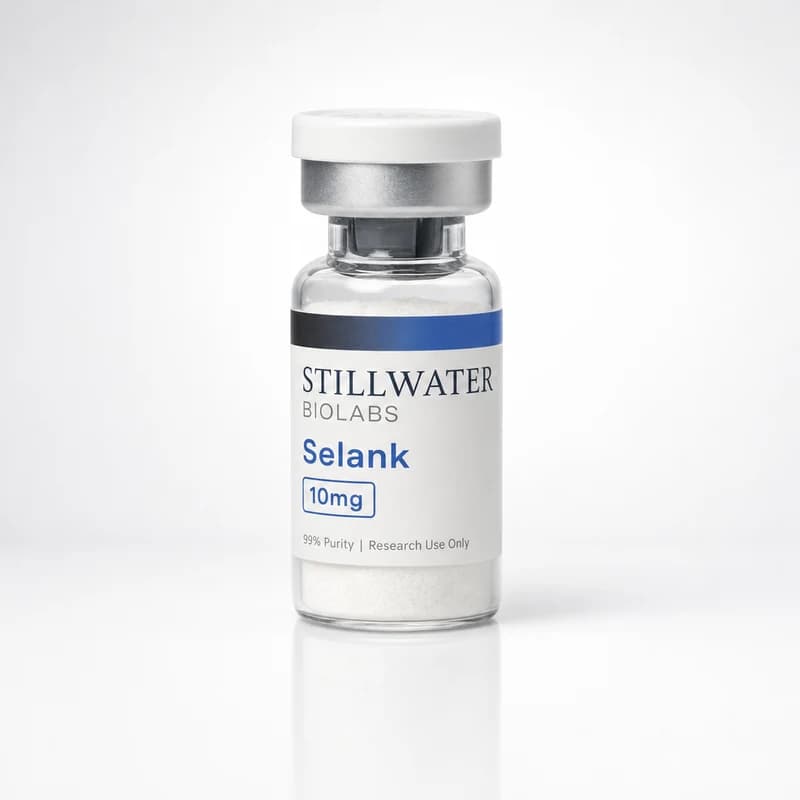
Selank
10mg
A synthetic analog of tuftsin studied for anxiolytic, nootropic, and immunomodulatory effects.
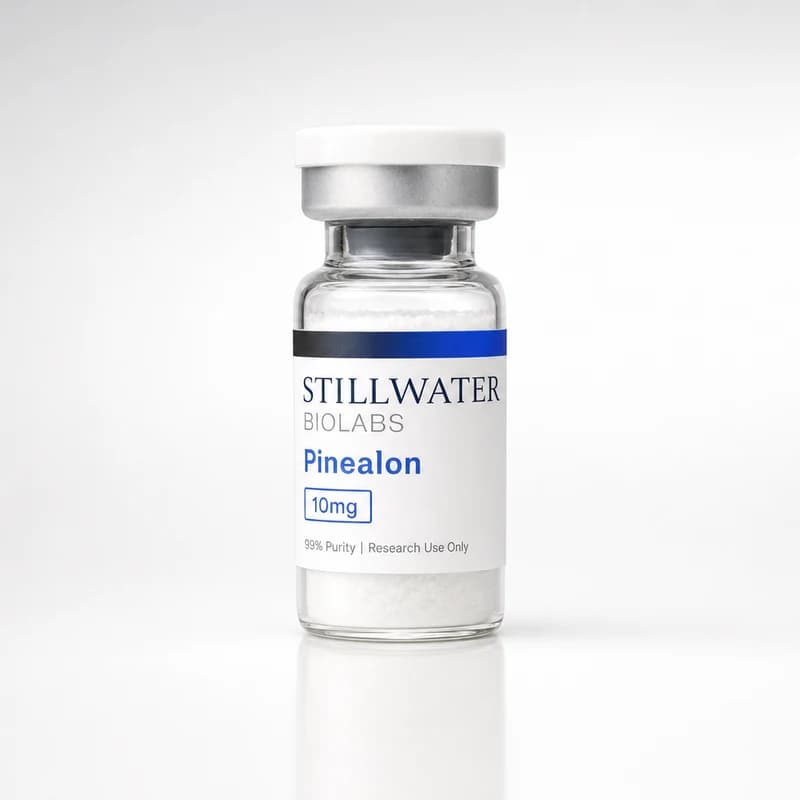
Pinealon
10mg
A synthetic tripeptide based on a pineal-derived sequence, supplied as a lyophilized reference standard for in-vitro neuroprotective assay models and nootropic research.
Frequently Bought Together
Semax
5mg
Request pricing
Selank
10mg
Request pricing
Pinealon
10mg
Request pricing