
≥99%
BPC-157 + TB-500 Blend
A lyophilized blend combining BPC-157 (15 aa, 1419.53 g/mol) and TB-500 (43 aa, 4963.50 g/mol) for in-vitro co-incubation and synergy assays.
Minimum order: 10 units per compound, across any mix of sizes.



Pay with Visa, Mastercard, or AMEX · ACH bank transfer saves 5%
Cold-chain shipping via UPS, with tracking provided. Freight and lead time are confirmed on your quote.
Third-party tested
Supplied to qualified labs and institutional buyers. Institutional use & buyer eligibility
Characteristics
| Property | Value |
|---|---|
| Components | BPC-157 (pentadecapeptide) + TB-500 (Thymosin Beta-4 fragment) |
| BPC-157 Molecular Formula | C₆₂H₉₈N₁₆O₂₂ |
| TB-500 Molecular Formula | C₂₁₂H₃₅₀N₅₆O₇₈S |
| BPC-157 Molar Mass | 1419.53 g/mol |
| TB-500 Molar Mass | 4963.44 g/mol |
| Physical Form | Lyophilized powder blend |
| Solubility | Both components freely soluble in water and aqueous laboratory solvent |
| Organoleptic Profile | White to off-white lyophilized powder; odorless |
| Storage Conditions | Store lyophilized at -20°C; reconstituted solution stable at 2-8°C for up to 10 days |
| Composition | Lyophilized blend of BPC-157 acetate and Thymosin Beta-4 acetate |
How is BPC-157 + TB-500 Blend Used in Research?
The BPC-157 + TB-500 blend is a lyophilized research formulation combining two synthetic peptides for in-vitro co-incubation and synergy assays. BPC-157 is a 15-amino acid synthetic peptide (1419.53 g/mol) and TB-500 is a 43-amino acid synthetic peptide (4963.50 g/mol). The blend is supplied as a laboratory research standard for characterizing the two-component system across a panel of in-vitro assays. Not for use in any living organism.
Characterization workflows profile the blend in endothelial tube-formation assays (where BPC-157 is used as a reference compound), cell-migration model assays (where TB-500 is used as a reference compound), and combined receptor-binding studies. Standard laboratory readouts include tube-formation quantification on Matrigel, scratch-assay cell-migration kinetics, and VEGF-pathway marker analysis in cultured endothelial cell lines.
Researchers use this blend as a two-component reference mixture for analytical method development (HPLC/LC-MS comparability work) and for co-activation assays investigating whether the two synthetic peptides produce additive or non-additive signals across the above in-vitro endpoints.
This product is supplied in a lyophilized form and requires reconstitution prior to laboratory handling. For research and laboratory use only. Not for human or veterinary consumption.
Areas of Study
In-Vitro Co-Incubation Assays
Applied as a two-component reference mixture in endothelial tube-formation assays, cell-migration scratch assays, and VEGF-pathway marker panels.
Synergy Characterization
Profiled for additive versus non-additive in-vitro signals across combined receptor-binding and cell-culture readouts.
Analytical Method Development
Used in HPLC/LC-MS comparability work requiring simultaneous identification of the 15- and 43-amino acid components.
Structural Reference
Serves as a combined identity and purity reference for the two synthetic peptides in laboratory characterization workflows.
Receptor-Binding Studies
Applied in parallel binding panels to characterize each component's receptor signature within the two-component system.
References
- [1]Sikiric P, Seiwerth S, Rucman R, et al. (2018). Stable gastric pentadecapeptide BPC 157 in preclinical research. Current Pharmaceutical Design, 24(18), 1990-2001.
- [2]Goldstein AL, Hannappel E, Sosne G, Kleinman HK. (2012). Thymosin β4: a multi-functional regenerative peptide. Expert Opinion on Biological Therapy, 12(1), 37-51.
- [3]Sosne G, Qiu P, Goldstein AL, Wheater M. (2010). Biological activities of thymosin β4 defined by active sites in short peptide sequences. FASEB Journal, 24(7), 2144-2151.
- [4]Cerovecki T, Bojanic I, Brcic L, et al. (2010). Pentadecapeptide BPC 157 (PL 14736) in ligament preclinical models. Journal of Orthopaedic Research, 28(9), 1155-1161.
- [5]Philp D, Huff T, Gho YS, et al. (2003). The actin binding site on thymosin β4 promotes angiogenesis. FASEB Journal, 17(14), 2103-2105.
Disclaimer: The information provided is for research reference only and does not constitute medical advice. Products are sold strictly for in-vitro research use.
Certificate of Analysis (COA)
Third-Party Verified Quality
Every batch of BPC-157 + TB-500 Blend is independently tested by an A2LA-accredited (ISO 17025:2017) third-party laboratory using HPLC-UV/VIS for purity and measured quantity. Each COA carries the lab's signed report and a batch-specific lot number. We publish these results publicly so you can verify exactly what you're getting.
View Lab ResultsRelated Products
 Best Seller
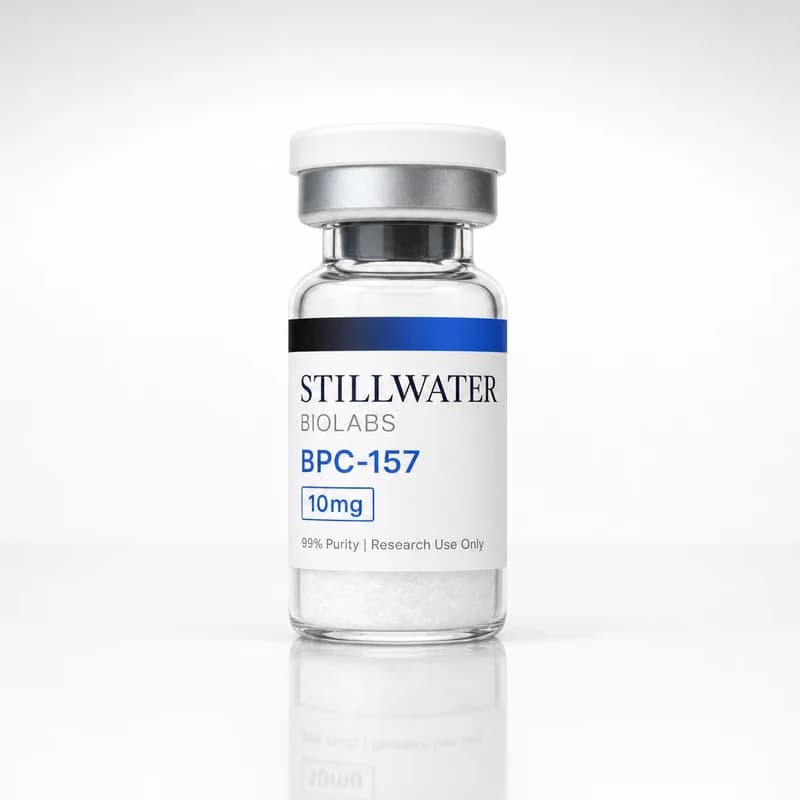
BPC-157
5mg – 10mg
A 15-amino acid synthetic peptide fragment derived from human gastric juice protein, supplied as a lyophilized research reference standard for in-vitro cytoprotection assays and receptor-binding studies.
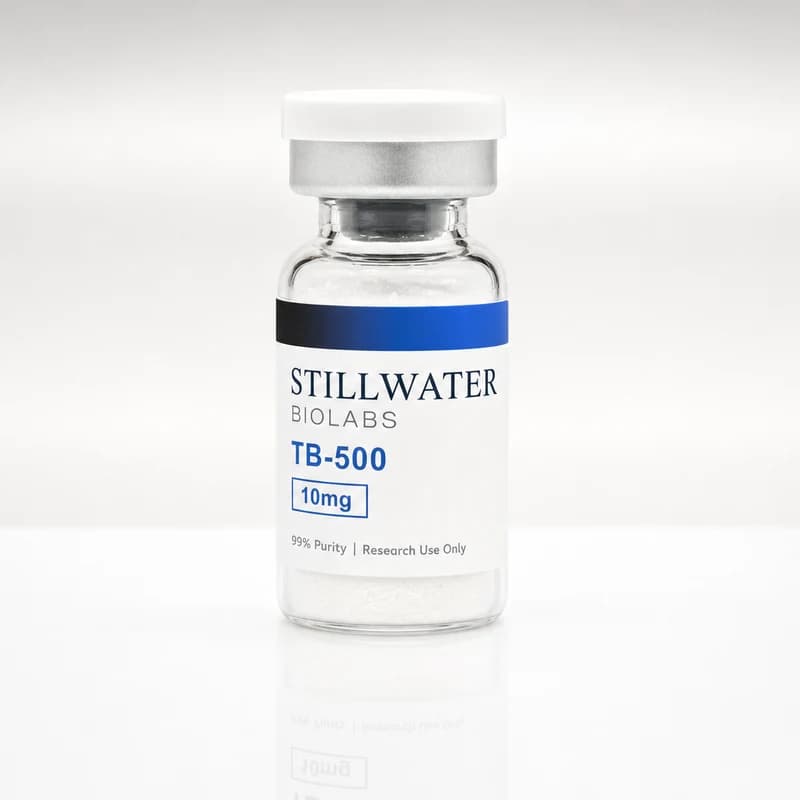
TB-500
5mg – 10mg
A 43-amino acid synthetic peptide (Thymosin Beta-4 fragment) supplied as a lyophilized powder for in-vitro actin-binding assays and cell-migration studies.
Frequently Bought Together
BPC-157 + TB-500 Blend
10mg (5mg/5mg)
Request pricing
BPC-157
5mg
Request pricing
TB-500
5mg
Request pricing